
Male incontinence is incredibly common, with over half of men experiencing incontinence at some point in their lives. For these individuals, it can be debilitating, particularly with the lack of access to male incontinence bins, making life outside of the home incredibly difficult.
The proper management of male incontinence waste is not just a clinical concern, but a hygiene, dignity, and waste issue that requires a structured and well-thought-out collection system in place. For organisations centred around care, hospitals, and medical facilities, correct waste handling and hygiene solutions provide an elevated level of care while protecting staff. This is where specialist hygiene solution suppliers and controlled approaches can make a big difference in commercial environments.
Understanding Male Incontinence Waste
Male incontinence waste typically includes absorbent pads, pull-up garments, liners, disposable wipes, and associated packaging materials. These items are designed to manage urinary and sometimes faecal incontinence safely, but once used, it becomes offensive waste which must be handled correctly. In many commercial and professional environments, this waste can sometimes be classified as clinical waste depending on the contamination level. Which is why it’s important to put in place correct segregation and provide a clear point of disposal.
Why Proper Waste Collection is Important
Supporting waste collection for male incontinence products is not only about cleanliness, but it also addresses the lack of facilities prevalent in male washrooms. It directly affects:
Dignity and User Wellbeing
Disposal practices impact how comfortable and respected individuals feel in public spaces. A discreet and well-managed system helps to preserve privacy and reduce embarrassment.
Infection Control
Used incontinence products can contain bodily fluids, which increases the risk of bacterial spread if not handled correctly. Controlled containment reduces exposure for staff and other visitors.
Odour Management
Incontinence waste can generate strong odours if not stored in suitable bins. Properly sealed collection systems are essential to maintain a clean environment.
Regulatory Compliance
In the UK, healthcare and care environments must comply with waste regulations and guidance for safe management of healthcare waste. This includes correct segregation, labelling and disposal schedules.
How a Waste Collection System Works
A well-structured collection system involves several stages, starting at the point of use and ending with licensed disposal or treatment.
1. Point of Disposal
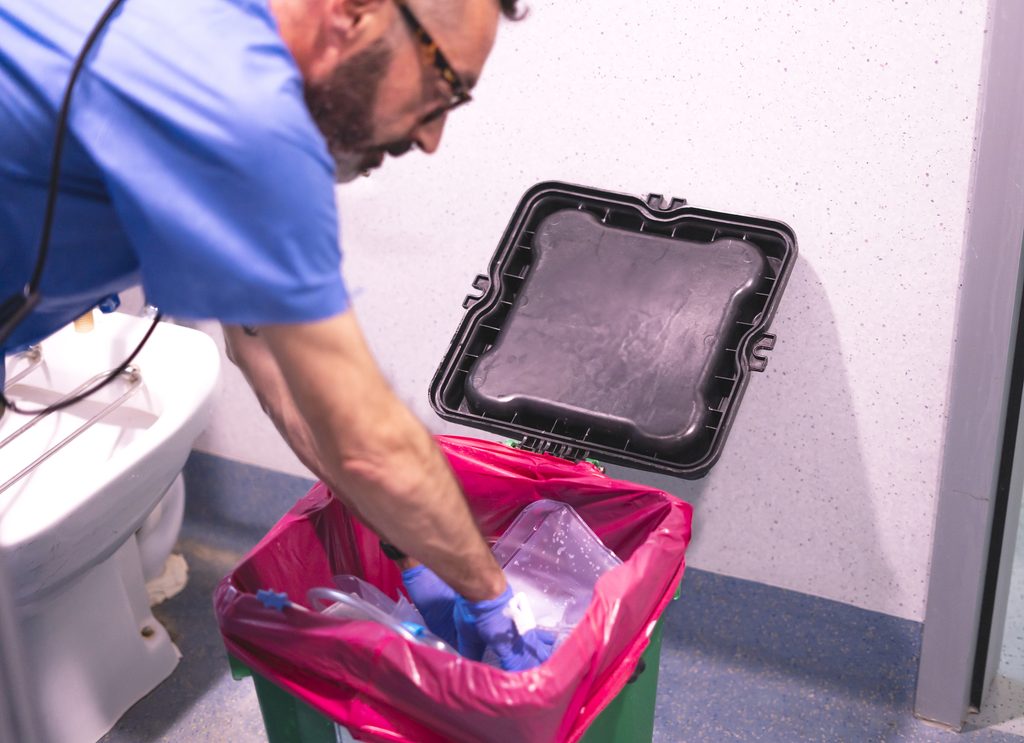
Disposal of incontinence waste should always be as close to the point of use as possible to reduce handling and lower contamination risk. Specialist hygiene bins are commonly used in bathrooms, care rooms and clinical areas, which are typically foot-operated or sensor-activated to reduce hand contact.
2. Containment
Once deposited, waste must be securely contained. Modern incontinence waste bins are designed with sealed lids to prevent odour escape, internal liners or cassette systems for safe removal, hands-free operation to reduce cross contamination, and antimicrobial surfaces in some cases. Some systems also use individual wrapping or sealing mechanisms for each item to further improve hygiene control.
3. Segregation of Waste Streams
Correct segregation is essential. Incontinence waste may be treated differently depending on the setting:
- General hygiene waste in non-clinical environments
- Offensive waste in care and residential settings
- Potentially clinical waste in hospitals or high-risk cases
Correct classification ensures that waste is processed through the appropriate treatment route, such as incineration or alternative facilities.
4. Storage and Collection
Once contained, waste must be stored securely until collection by a licensed waste contractor. Storage areas should be secure, clean and well-ventilated, and designed to prevent leakage or pest access. Regular collection schedules are important to prevent overflow and odour build-up, particularly in high usage environments such as care homes.
How Hygiene Specialists Support Waste Management
For organisations managing multiple sites or care environments with higher usage levels, working with a hygiene specialist supplier can significantly improve consistency and compliance. Specialist providers typically supply male incontinence solutions, such as:
- Purposefully designed male incontinence waste bins
- Incontinence waste bags
- Scheduled servicing and replacement systems
- Odour control solutions
- Training and compliance guidance for staff
This approach helps ensure that waste handling is not handled incorrectly, which can often lead to inconsistency and hygiene risks.
Support Dignified Male Incontinence Waste Disposal with Envirotec
Male incontinence can be a sensitive topic, and there is no legal obligation for public spaces to provide male incontinence bins, unlike sanitary waste, which is why it has become a widespread issue. Waste management plays a subtle but important role in maintaining well-being and cleanliness. A thoughtfully designed collection system, therefore, contributes directly to a greater quality of life and personal care.
With Envirotec’s hygiene solutions, we help commercial sectors enhance their washrooms, from male incontinence waste bins to licensed collections and documented disposal. To discover our full range of services, get in touch with a member of our team today.