
Disposing of sharps waste demands a level of care and attention beyond what is usually required. This is due to the increased risk of coming into contact with sharps, which may be contaminated in various ways, including the risk of cuts and scratches. This leads to greater safeguarding being implemented in workplaces, making sure staff and visitors handling waste take great care not to harm themselves.
Many associate sharps with medical waste, and while this is true, they can also be found elsewhere. From hospitals and doctors’ surgeries to tattoo studios and kitchens, many environments use sharp needles and blades which need to be disposed of correctly.
Envirotec provides compliant sharps waste disposal services that help businesses meet their legal responsibilities while protecting staff, visitors and the wider environment.
Sharps Classification and Legal Compliance
Within the Health and Safety (Sharp Instruments in Healthcare) Regulations 2013, employers have a responsibility to provide safe sharps disposal and staff training. This is further backed by regulations such as the Control of Substances Hazardous to Health (COSHH) 2002 and the Environmental Protection Act 1990.
For safeguarding to be adopted within commercial settings, staff should be adequately trained in identifying and handling sharps waste. Some common sharps include:
- Hypodermic needles & syringes
- Scalpels & blades
- Lancets
- Suture needles
- Broken glass
- Tattoo and piercing needles
- Razor blades
- Metal, wire, pins, and staples
Depending on the contaminant level, each sharp should be placed into its designated container. In the UK, sharps containers are colour-coded to help segregate each waste type and ensure they receive the appropriate disposal method.
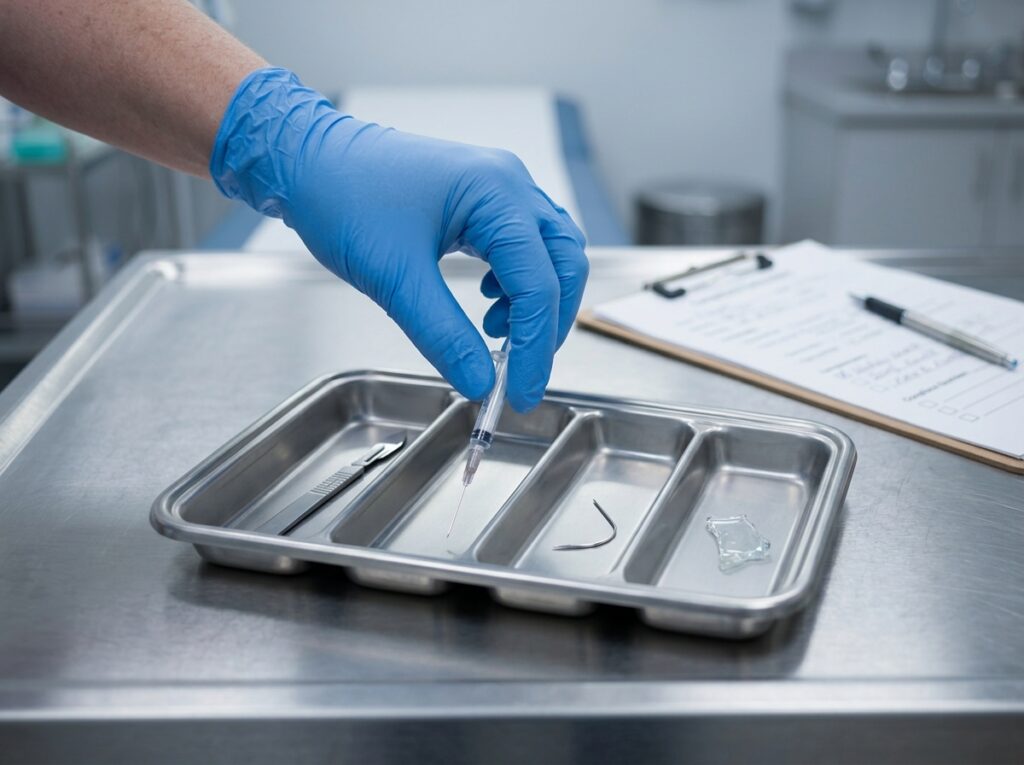
Which Colour Sharps Container Do I Need?
Orange Sharps Container
This container is for sharps that have not been contaminated with medicines, such as blood test, acupuncture, and tattoo needles. This waste must be disposed of by incineration or other authorised process and is designed for the consignment of waste categorised by EWC codes: 18-01-01, 18-01-03, 18-02-01, 18-02-02.
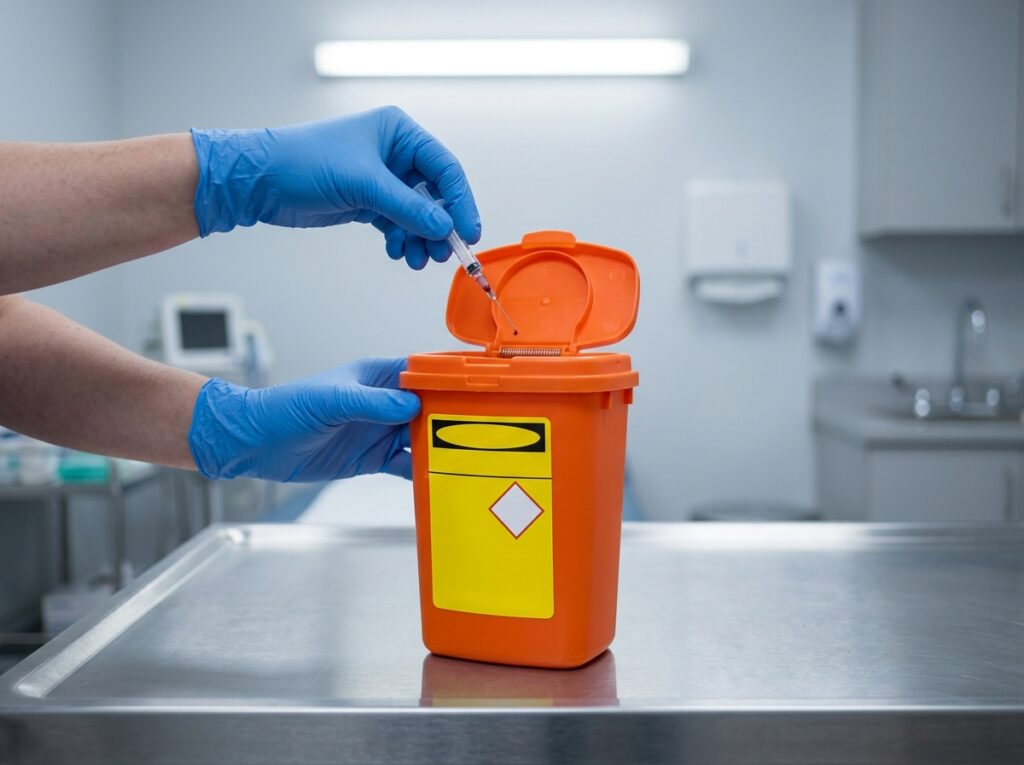
Yellow Sharps Container
This container is for sharps contaminated with medicines, excluding cytotoxic or cytostatic drugs. They must be disposed of by incineration or other authorised processes and are designed for the consignment of waste categorised by EWC codes: 18-01-01, 18-01-03, 18-01-09, 18-02-01, 18-02-02, 18-02-08.
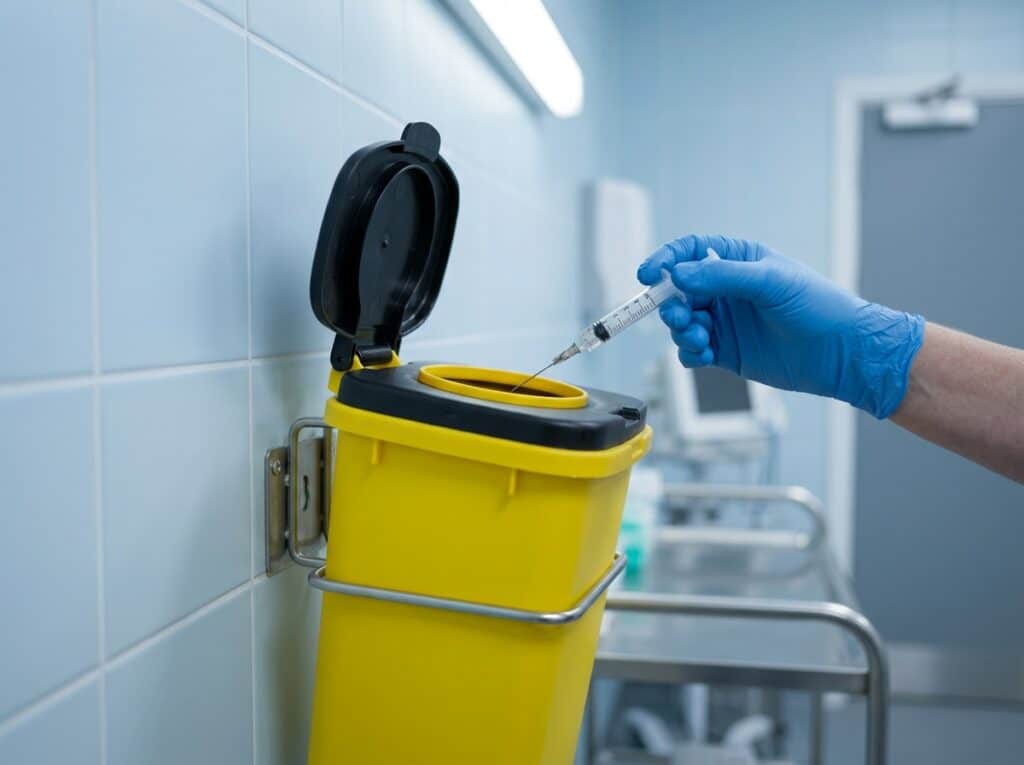
Blue Sharps Container
This container is for pharmaceutical waste in its original packaging. This must also be disposed of by incineration or other authorised processes and is designed for the consignment of waste categorised by EWC codes: 18-01-09, 18-02-08.
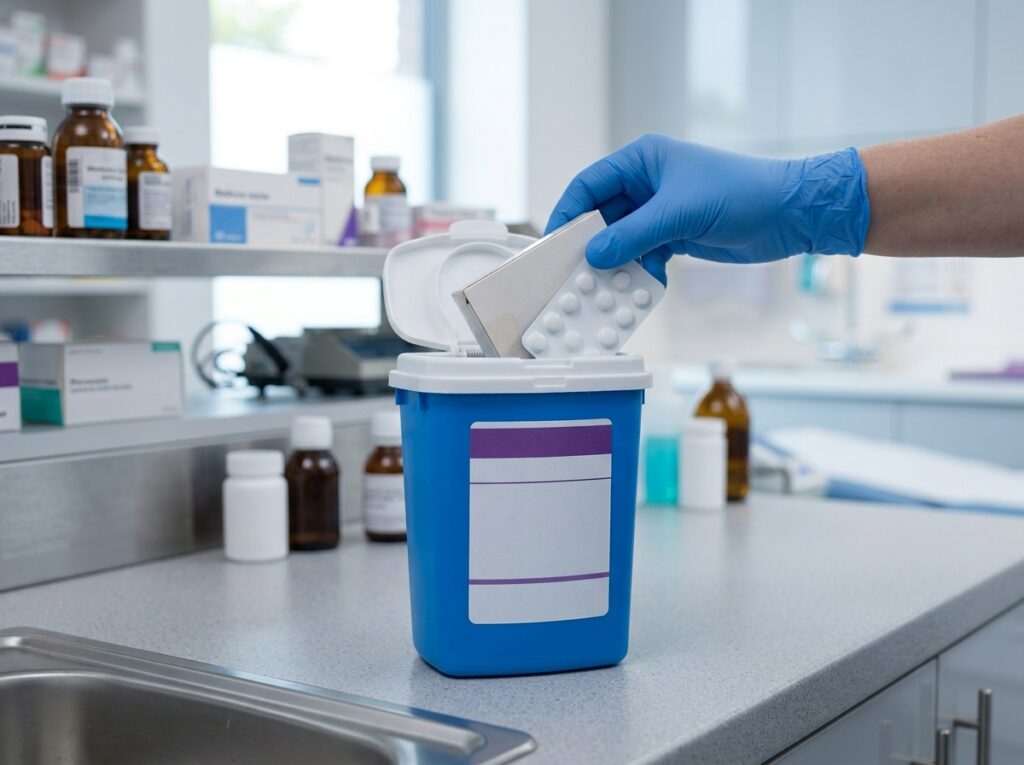
Purple Sharps Container
This container is for cytotoxic and cytostatic waste. It must be disposed of by incineration or other authorised processes and is designed for the consignment of waste categorised by EWC codes: 18-01-01, 18-01-03, 18-01-08, 18-01-09, 18-02-01, 18-02-02, 18-02-07, 18-02-08.

How Envirotec Manages Sharps Removal & Disposal
We always maintain a transparent and professional waste management process, maintaining compliance for commercial sectors.
Step One
We begin by assessing and monitoring your business, looking at the types of sharps waste produced and the volume. This allows us to recommend the correct sharps containers and collection schedule to suit your operational needs.
Step Two
We supply sharps containers in the appropriate size and colour for your waste. We can even assist staff with ensuring the containers are being used safely and never filled above the manufacturer's line.
Step Three
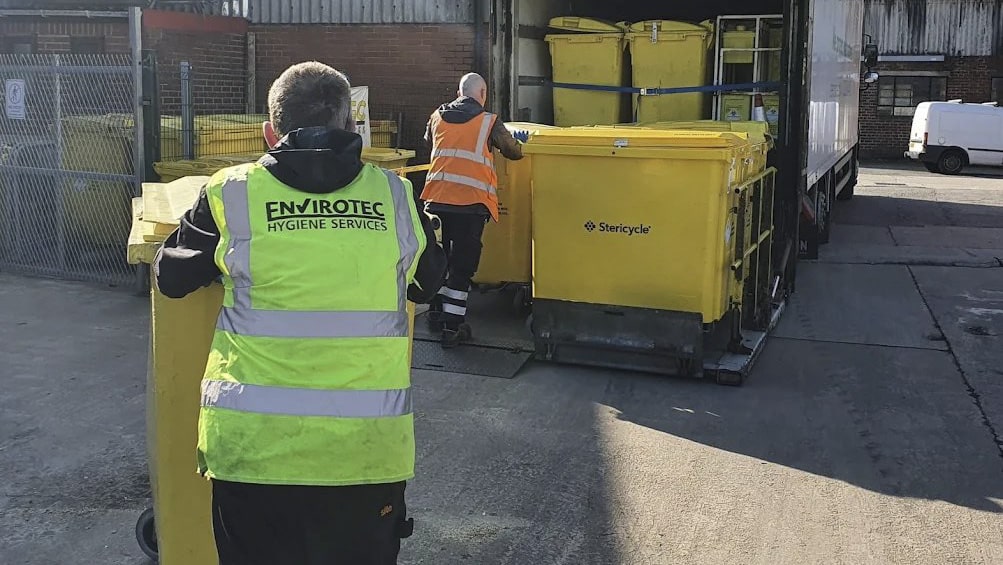
We arrange collections based on a regular agreed schedule, or on a one-off basis. Our trained waste collection teams remove sealed sharps containers safely, helping to minimise disruption to your workplace.
Step Four
All sharps waste is transported in accordance with waste transport regulations to an authorised treatment facility. Throughout the process, waste is managed with proper documentation to support legal compliance and provide a clear audit trail.
Step Five
Depending on the waste type, sharps are treated using approved methods such as high-temperature incineration or other authorised treatment processes. This ensures hazardous waste is managed responsibly while reducing the risks associated with contaminated sharps.
Step Six
We always provide relevant waste documentation for your records and compliant sharps waste management, while routinely reviewing your service to adjust collection frequencies as your needs change.
Why Choose Envirotec for Sharps Waste Disposal?
Managing sharps waste relies on a reliable collection service, knowledgeable support and a clear understanding of waste legislation. Envirotec work closely with businesses across a wide range of sectors to provide dependable sharps waste collection that prioritises safety, compliance and convenience.
Whether you’re a commercial kitchen, GP surgery, dental practice, veterinary clinic, tattoo studio, beauty studio, or laboratory, we can help you implement an effective sharps disposal solution tailored to your business. Contact our team today to discuss your sharps waste disposal requirements and how we can offer a safe and highly efficient service.
FAQ’s
What is classified as sharps waste?
Sharps waste includes any item capable of puncturing or cutting the skin that requires specialist disposal. Common examples include hypodermic needles, syringes, scalpels, lancets, suture needles, razor blades, tattoo and piercing needles, and certain types of broken glass that may be contaminated.
Who needs a sharps waste disposal service?
Any organisation that produces sharps waste has a responsibility to dispose of it safely and compliantly. This includes hospitals, GP surgeries, dental practices, veterinary clinics, pharmacies, care homes, laboratories, tattoo and piercing studios, beauty clinics and some commercial kitchens.
Can sharps be disposed of in general waste?
No, sharps should never be placed in general waste or recycling bins. They must be disposed of in an appropriate, approved sharps container before being collected by a licensed waste management provider for treatment.
How full should a sharps container be before collection?
Sharps containers should only be filled to the manufacturer’s designated fill line. Overfilling increases the risk of needlestick injuries and may prevent the container from being sealed correctly for safe transportation.
How often should sharps waste be collected?
Collection frequency depends on the amount of waste your organisation generates, available storage space and operational requirements. Some businesses require scheduled collections, while others benefit from an on-demand service. Envirotec can help find a collection schedule to suit your needs.
What happens to sharps waste after collection?
Once collected, sharps waste is transported to an authorised treatment facility where it is managed according to its classification. Depending on the waste type, it will be treated by incineration or by another approved process in line with legislation.
Do you supply sharps containers as part of the service?
Yes, Envirotec can supply a range of colour-coded sharps containers in various sizes to help your business segregate and store sharps waste safely before collection.
How do I arrange a sharps waste collection?
Simply contact our team to discuss your requirements. We will assess the type and quantity of your sharps waste and recommend a safe and dedicated collection service tailored to your organisation.